Skin Care Education
Non-Surgical Alternatives to a Facelift: Lifting and Firming Outside the OR
A surgical facelift does something no non-surgical treatment can fully replicate: it physically removes excess skin and repositions the deeper structural layer of the face. Non-surgical options work differently, stimulating your own collagen or subtly repositioning tissue rather than cutting and lifting directly. That does not make them lesser options. It makes them the right tool for a specific range of aging, and the wrong tool past a certain point. This guide is about that line, and about helping you work out which side of it you are on.
Table of Contents
Key takeaways
- A surgical facelift physically removes excess skin and repositions the deeper structural layer of the face, a magnitude of change no non-surgical treatment fully replicates.
- Non-surgical alternatives, ultrasound tightening, biostimulator fillers, and volume-restoring dermal filler, work by triggering your own collagen or adding volume, and helps with early to moderate aging.
- There is realistic ceiling for non-surgical treatments. Significant excess skin or advanced jowl and neck laxity are situations where a surgical consultation is the more honest recommendation, not a marketing gap to be talked around.
- Downtime is the starkest practical difference: non-surgical options have little to none, while a surgical facelift typically requires one to a few weeks of recovery.
- Many people use non-surgical treatments to maintain a result between surgical procedures, or as a standalone option if their aging has not progressed to the point where surgery adds meaningfully more.
What is a non-surgical facelift?
“Non-surgical facelift” is not one treatment. It is shorthand for a group of treatments that firm, lift, and restore volume without incisions, without anesthesia, and without removing any skin. Nothing is cut and nothing is surgically repositioned. Each option works with the tissue you already have, either by prompting your body to build new collagen or by replacing volume that has been lost.
The category splits into three approaches, and they work in different ways.
Energy-based tightening: Devices like Ultherapy and Sofwave deliver focused ultrasound energy to set depths beneath the skin. The heat creates a controlled healing response, and your body answers by producing new collagen over the following months. The firming comes from your own tissue, which is why the result builds gradually instead of appearing the day you leave.
Collagen biostimulators: Sculptra is injected, but it does not behave like traditional filler. Instead of adding volume on placement, it prompts your body to lay down its own collagen across several months. The improvement in firmness and thickness is something you build rather than something added.
Volume restoration: Hyaluronic acid dermal filler adds volume directly where it has gone, usually the cheeks and temples. Restoring support high in the face can make the lower face read as lifted, even though nothing has physically been lifted. It changes the structure underneath rather than the skin itself.
A fourth approach, thread lift, uses dissolvable sutures under the skin to mechanically reposition tissue. It sits closest to surgery in how it works, and it is included in this guide for a complete picture of the category, though it is not offered at OrangeTwist.
The word facelift in all of these describes the goal, not the method. Knowing which mechanism a treatment uses is what tells you whether it can do what you are hoping for.
What a surgical facelift does, so the comparison is honest
A surgical facelift removes excess, loose skin and repositions the SMAS, the deeper structural layer of connective tissue and muscle beneath the skin, restoring a firmer facial contour directly rather than triggering the body to build its way there. This is why surgery remains the more appropriate route for significant skin excess or advanced structural laxity: no energy device or injectable adds or removes tissue at that scale.
Recovery is also different. Surgical facelift recovery typically involves one to a few weeks of visible healing, swelling, and activity restriction, compared to little to no downtime for the non-surgical options below. That tradeoff, a bigger result for a recovery period, is the honest core of this whole comparison.

How the non-surgical options compare to surgery
| Option | What it does | How close to surgery | Downtime |
|---|---|---|---|
| Ultrasound tightening (Ultherapy, Sofwave) | Triggers collagen at various depths to firm and lift gradually | Meaningful improvement for early to moderate laxity; does not remove skin or reposition SMAS | Minimal |
| Biostimulator filler (Sculptra) | Triggers gradual collagen rebuilding for volume and skin quality | Improves structure gradually; cannot address excess skin | Minimal |
| Volume-restoring dermal filler | Adds volume directly to hollowed or flattened areas | Restores lost volume; does not lift or remove skin | Minimal |
| Thread lift (not offered at OrangeTwist) | Mechanically repositions tissue with dissolvable threads, plus some collagen stimulation | A more immediate mechanical lift than energy devices, but a more modest degree of lift than surgery | Some swelling and bruising, typically one to two weeks |
| Surgical facelift | Removes excess skin, repositions the SMAS directly | The full surgical result; the benchmark this whole comparison is measured against | One to a few weeks |
Who non-surgical is a good fit for
- Early to moderate skin laxity, where firming and lifting, not skin removal, is the primary need.
- Volume loss in the cheeks, temples, or under-eye area that filler or a biostimulator can restore.
- Someone who is not ready for, or does not want, a surgical procedure and its recovery time, and understands the realistic ceiling that comes with that choice.
- Maintenance between surgical procedures, or in the years before surgery becomes the more appropriate option.
- A desire to try a lower-commitment option first, understanding it may not deliver a surgical-level result.
When a surgical consultation is the more honest recommendation
- Skin that visibly hangs or folds, rather than just appearing loose or thin.
- Significant jowl or neck laxity that has progressed well beyond early signs.
- A specific expectation of a dramatic, surgical-level change from a non-surgical treatment. Setting that expectation honestly upfront prevents a disappointing result later.
- A degree of aging where multiple non-surgical treatments have already been tried without the improvement you are looking for.
Suitability for non-surgical treatment generally
Non-surgical options may be less appropriate, or need a different conversation, in these situations:
- Significant excess skin, where the honest recommendation is a surgical assessment rather than a longer trial of non-surgical treatment.
- Pregnancy or breastfeeding, for most devices and injectables in this category.
- Certain medical conditions specific to each treatment, which your provider screens for individually.
- An expectation that stacking multiple non-surgical treatments will eventually equal a surgical result. It will not, and an honest provider tells you that rather than layering treatments indefinitely.
The practical tradeoff: downtime, cost, and how long it lasts
Non-surgical options have little to no real downtime, and most people return to normal activity the same day. Results build gradually over weeks to months and commonly last from several months to a couple of years depending on the specific treatment, requiring maintenance over time. A surgical facelift involves a recovery period, one to a few weeks, but delivers a result that is generally more dramatic and considerably longer-lasting, often many years, without the ongoing maintenance non-surgical options require.
Cost reflects this tradeoff too: non-surgical treatments are typically lower cost per session but recur over time, while surgery is a larger upfront cost intended to last considerably longer. Neither is categorically the better value; it depends on your degree of aging and your own priorities around downtime.
Why choose OrangeTwist South Bay?
Our South Bay center offers Ultherapy, Sculptra, and dermal filler on site, so your provider can build a non-surgical plan around your specific aging pattern. Every visit starts with a complimentary You Review, where your provider gives you an honest assessment of whether non-surgical treatment is a fit for your goals, or whether a surgical consultation would serve you better. We do not perform surgical facelifts on site, and your provider will tell you plainly when that is the more appropriate route rather than stretching a non-surgical plan past what it can realistically deliver.
Frequently Asked Questions
For early to moderate aging, they can deliver a meaningful lift and firming effect. For significant excess skin or advanced structural laxity, they cannot replicate what surgery does, since surgery physically removes skin and repositions the deeper facial structure in a way no energy device or injectable can. An honest provider will tell you which category your specific case falls into.
This is a common term for using dermal filler, sometimes alongside Botox, to restore volume and soften the signs of aging without surgery. It restores lost volume rather than lifting or removing skin, and works best for volume loss rather than significant sagging.
No, thread lift is not currently part of OrangeTwist’s treatment menu. This guide includes it for an honest, complete picture of the non-surgical category, but it would need to be sourced elsewhere if that is specifically what you are looking for.
This varies by treatment, commonly ranging from several months to a couple of years, compared to a surgical facelift’s considerably longer-lasting result. Non-surgical options generally require ongoing maintenance over time rather than a single, lasting procedure.
Skin that visibly hangs or folds, significant jowl or neck laxity, or an expectation of a dramatic, immediate change are all signs a surgical consultation may be the more honest next step. Your provider can give you a direct assessment rather than letting you find this out through a longer trial of non-surgical treatments.
Our South Bay center offers Ultherapy, Sculptra, and dermal filler, among others, so your provider can build a plan around your specific aging pattern and goals. We do not perform surgical facelifts on site, and will refer you appropriately if that is the better fit.
The bottom line
Non-surgical facelift alternatives are an effective choice for the right degree of aging, not a lesser substitute dressed up to avoid saying surgery. The honest question is not which non-surgical option sounds the most impressive; it is whether your specific aging pattern is a match for what non-surgical treatment can deliver, or whether a surgical consultation would serve you better. A complimentary You Review at our South Bay center is where that honest assessment happens.
Ready when you are
Book a complimentary, no pressure You Review and we will build the right plan for you, with no obligation to book treatment.
Visit us in South Bay
California
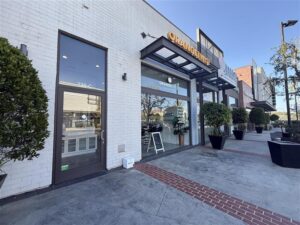
Los Angeles – South Bay
730 S Allied Way Ste C, El Segundo, CA 90245, USA
Monday
Tuesday
Wednesday
Thursday
Friday
Saturday
Sunday
9:00 AM – 6:00 PM
9:00 AM – 6:00 PM
9:00 AM – 6:00 PM
9:00 AM – 6:00 PM
9:00 AM – 6:00 PM
9:00 AM – 5:00 PM
11:00 AM – 5:00 PM

Kai Aiyub
Center Manager


Got Goals?
We’re Listening.
Book your no-pressure, no-cost You Review and let’s talk about your vision.