Skin Care Education
Beyond Lips: How Cheek and Jawline Filler Balance the Whole Face
Whilst lip filler may get a large share of the attention, it is rarely the treatment that changes a face the most. Instead, it is a persons cheeks and jawline that provide a structural frame for every other feature to sit within. When this frame softens, the whole face can read a little tired, even if the lips look exactly the same. Most clients arrive at our Alliance Town Center asking about one area, then leave with a plan that addresses two, because that is usually where the visible difference comes from. This guide covers what cheek and jawline filler each do, who they tend to suit, what recovery genuinely looks like, and how a balanced plan comes together with a Licensed Provider.
Table of Contents
Key takeaways
- Cheeks are the structural foundation of the midface. When they lose volume, under-eye hollows, nasolabial folds and jaw definition often soften along with them.
- Jawline filler adds structure and a cleaner edge along the mandible, which can visually steady a softening lower face without treating the jaw muscle itself.
- Filler results are visible immediately, with swelling typically settling over one to two weeks to reveal the final look.
- Results commonly last six to eighteen months depending on the product, the area and your metabolism. Structural areas such as cheeks and jawline tend to hold longer than lips.
- Cheek and jawline filler are often planned as a pair, because restoring the frame changes how the rest of the face reads, sometimes softening under-eye hollows without treating them directly.
- Hyaluronic acid filler can be dissolved with hyaluronidase, which is part of why it remains the default choice for most clients and providers.
- Filler adds volume and structure. It does not tighten loose skin, so some clients are better served by a tightening treatment, a collagen stimulator, or a combination.
Why this topic matters
Search interest in lip filler dwarfs everything else in the injectables category. This is because when searching for treatments, most people research the treatment have heard of rather than the treatment their face would respond to best. We see that gap in consultations every week. A client will book in to discuss under-eye hollowing, and it turns out the answer sits higher up, in the midface. Someone else asks about a double chin, when the better question is whether the jaw has a defined edge to work with in the first place.
Understanding what each area before you book makes the ‘You Review’ a different conversation. You arrive able to describe what bothers you, and your provider can explain which part of the frame is causing it.
What each treatment actually does
Cheek filler
Cheek filler restores volume in the midface. That’s the area between your eyes and your mouth, and it tends to be the first place volume goes. Two things are happening at once. Collagen thins, so the skin loses its internal scaffolding. And the deep fat pads sitting over your cheekbones lose fullness and slide downward. The upper face flattens, and the weight settles lower.
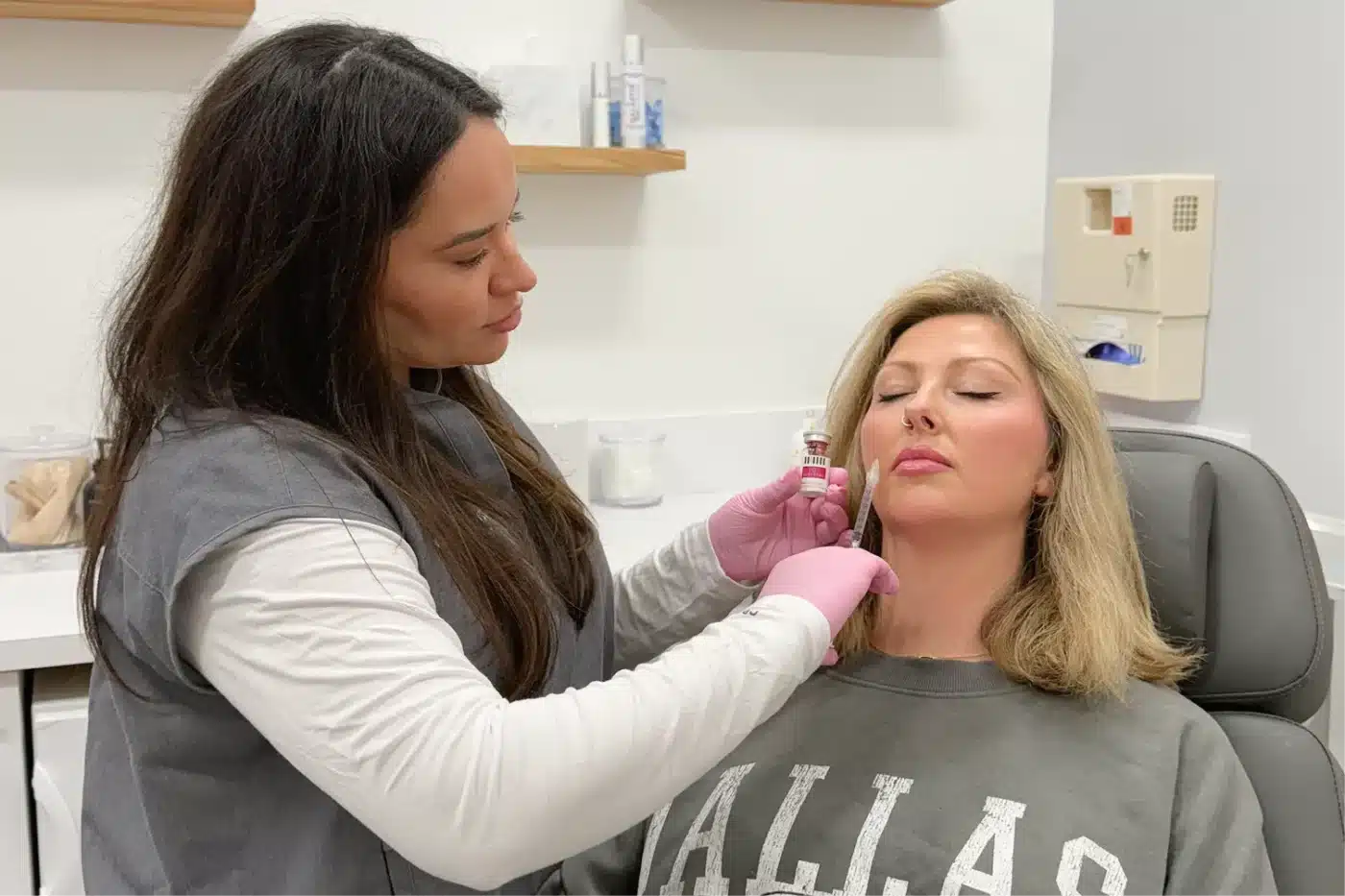
Product is usually placed deeply, against the underlying bone structure across the cheekbone, so it provides support rather than surface fullness. Restoring that support lifts adjacent structures: under-eye hollows can look shallower, nasolabial folds often soften, and the jawline reads more defined, all from one well-placed treatment in the cheek itself. Cheek volume is where many balanced plans begin, and it is a common starting point for clients exploring dermal fillers for the first time.
Jawline filler
Jawline filler works differently. It adds structure along the mandible and at the jaw angle, sharpening the line from ear to chin and creating a cleaner transition into the neck. For some clients that restores definition which softened over time. For others it builds structure they never had. It’s a separate placement from cheek filler, though the two are often done in the same visit, and jawline definition treatment usually comes up alongside chin projection, since the two shape the same silhouette.
Jawline filler and masseter treatment get confused, so it’s worth separating them. Jawline filler changes the shape of the jaw outline. A neuromodulator placed in the masseter relaxes a wide or overworked jaw muscle. Different tools for different jobs, and plenty of clients are suited to both.
Why providers plan them together
The face works as a system. Flatten the cheeks and the jawline can look heavier by comparison, even when nothing has changed along the jaw. Add jawline structure without addressing the cheeks and the face may look strong at the bottom but hollow above. Planning both together, even across two visits, provides balance to the whole lower two thirds of the face rather than treating each area as an isolated fix.
Product choice matters here too. Soft, flexible gels belong in areas that move, like lips. Denser gels hold their shape, which is what rebuilding a cheekbone or a jaw edge actually needs. Your injector picks by depth and by what the product has to support, not by reaching for the same syringe every time.
Comparing your structural options
| Option | Best for | Downtime | Results and duration |
|---|---|---|---|
| Cheek filler | Midface volume loss, flattening cheekbones, under-eye hollowing driven by lost support | Minimal, some swelling or bruising for a few days | Visible immediately, settles in one to two weeks, commonly lasts nine to eighteen months |
| Jawline filler | Softening or undefined jaw edge, weak transition into the neck | Minimal, occasional bruising along the jaw | Visible immediately, settles in one to two weeks, commonly lasts nine to eighteen months |
| Chin filler | Limited chin projection affecting the profile and the jaw line it feeds into | Minimal | Visible immediately, often lasts toward the longer end of the range |
| Collagen stimulator (Sculptra) | Gradual, broader volume restoration where a slower build suits the goal | Minimal, usually a short course of sessions | Builds gradually over several months, longer lasting once established |
| Skin tightening (Sofwave) | Laxity rather than volume loss, where adding filler would not address the concern | Minimal | Gradual over three to six months as collagen remodels |
Who is cheek and jawline filler suitable for?
Filler tends to suit clients with mild to moderate midface volume loss, or a jaw edge that has started to soften. It works well if you want a non-surgical option with very little downtime and you are in good general health. The other thing that matters is going in clear on what added volume can and cannot do.
It may be less appropriate, or need a different plan first, in the following situations:
- Significant skin laxity, where a tightening treatment or a surgical opinion is likely to serve you better than added volume.
- Active skin infection, inflammation or breakouts at the intended treatment site.
- Pregnancy or breastfeeding, where dermal filler is not offered.
- A history of severe allergic reactions, or known sensitivity to hyaluronic acid products or lidocaine.
- Certain autoimmune or immunosuppressive conditions, which your provider will review individually.
- Blood thinning medication or supplements, which do not necessarily rule treatment out but do raise bruising risk and need to be disclosed.
- Recent or imminent dental work, which is usually best spaced a couple of weeks away from filler in the lower face.
- A concern that is muscle related rather than structural, such as jaw clenching or a wide masseter, where a neuromodulator may be the better tool.
Suitability is a clinical assessment, not a checklist you can complete online. Your Licensed Provider reviews your medical history, your facial anatomy and your goals together before recommending anything.
What results can you expect?
Results are visible immediately, but swelling masks the final look for the first one to two weeks. What you see at the two week mark is the result that represents you for the following months, which is why providers avoid judging symmetry or adding more product before that point.
- Day one: visible change, often with mild swelling and a firm feel in treated areas.
- Days two to four: swelling and any bruising are usually at their most noticeable, then begin to settle.
- Weeks one to two: the product integrates with surrounding tissue and the final contour emerges.
- Two week check in: the appropriate time to review symmetry and decide whether a small refinement is worthwhile.
- Ongoing: many clients maintain results with a top up at nine to twelve months rather than starting from scratch each time.
Volume needed varies considerably. Some clients see the change they wanted with a modest amount across both areas, while others build structure gradually over two or three appointments. Building in stages is common and often preferable, because it lets you assess each step in your own mirror before going further. Results vary depending on your anatomy, the products chosen, and how quickly your body metabolises hyaluronic acid.
Downtime and aftercare
Most cheek and jawline filler sessions take 30 to 60 minutes combined, including numbing time if you choose it, and most clients return to normal activities the same day. Typical aftercare guidance includes:
- Avoid strenuous exercise, saunas, steam rooms and hot yoga for the first 24 hours.
- Avoid alcohol for the first 24 hours, as it can worsen swelling and bruising.
- Sleep on your back with your head slightly elevated for the first night or two where you can.
- Skip facial massage, facials, microdermabrasion and any energy based facial treatment for around two weeks.
- Pause strong actives such as retinoids and acids for 24 hours, then resume as normal.
- Use cool compresses for comfort rather than pressure or firm massage of treated areas.
- Apply sunscreen as usual and avoid extended direct heat and sun exposure while swelling settles.
- Makeup can usually go back on after 12 hours, applied gently.
Your provider will give you written aftercare specific to the products used and your medical history, along with a direct route to reach the center if anything concerns you.
Risks, limitations and realistic expectations
Dermal filler is a medical treatment, and a responsible plan includes the parts that are not marketing copy.
Common and expected
Swelling, tenderness, redness at injection points and bruising are common and usually settle within a few days to a week. Small areas of firmness can be felt in structurally placed filler early on and typically soften as the product integrates.
Less common
Prolonged swelling, visible asymmetry that needs a small refinement, or a palpable nodule that requires review. Superficially placed filler can occasionally cause a bluish tinge, which is one reason structural product is placed deep.
Rare but serious
Injection into or compression of a blood vessel can restrict blood supply to the skin, and in very rare cases affect vision. This is the reason technique, anatomical knowledge and provider training matter far more than the price of a syringe. Contact your provider immediately, and seek urgent medical care, if you experience severe or increasing pain, blanching or dusky discoloration of the skin, or any change in vision after treatment.
Limitations
Filler adds volume and structure. It does not tighten skin, reduce fat, or reproduce the effect of surgery. If loose skin is the main issue, adding volume can make the lower face look heavier rather than better, which is exactly the assessment your provider is making before recommending a plan. Filler is also temporary by design, and maintaining a result means returning periodically.
Why choose OrangeTwist Fort Worth – Alliance Town Center?
Every injectable treatment at OrangeTwist is performed by a Licensed Provider, and every plan starts with a complimentary You Review rather than a sales conversation. Clients visit our Alliance Town Center from across north Fort Worth, Keller, Haslet, Roanoke and the wider Alliance corridor, and many come to us after being quoted a syringe count somewhere else without an assessment behind it.
The approach is deliberately incremental. Your provider recommends only what will make a visible difference, builds in stages where that serves you better, and tells you plainly when a different treatment, or no treatment at all, is the honest answer.
Frequently Asked Questions
It depends on what is actually happening in your face. Some clients need cheek volume only, with an improvement along the jaw arriving as a side benefit. Others need jawline structure specifically. Your provider assesses both areas at your You Review and recommends only what will make a visible difference, rather than a two for one package by default.
Done well, it should read as a well rested version of you rather than a different person. Structural filler is used to restore what volume loss took away, not to add a new look. Your provider builds gradually and checks in throughout, so you can stop at natural well before you get anywhere near overdone.
That varies with your anatomy and your goal, and it is not something anyone can responsibly quote before seeing you. Many clients treating both areas start with a modest amount and build over a second appointment once the first has settled. Your provider will explain the recommended amount, and why, before anything is agreed.
Most cheek and jawline filler sessions take 30 to 60 minutes combined, including numbing time if you choose it. You can return to normal activities the same day, avoiding strenuous exercise and significant heat for the first 24 hours.
Most clients find it manageable. Fillers used at OrangeTwist contain lidocaine for built in numbing, and topical numbing cream is available beforehand. You may feel pressure during placement, particularly along the jaw, but sharp pain is uncommon and you can ask your provider to pause at any point.
Typically six to eighteen months, depending on the product, the area and your metabolism. Cheek and jawline filler generally last toward the longer end of that range, since they sit in lower movement areas of the face. Many clients maintain results with a smaller top up rather than a full repeat treatment.
Hyaluronic acid fillers can be dissolved with hyaluronidase, an enzyme that breaks the gel down. That reversibility is a major reason hyaluronic acid filler remains the default choice for most clients and providers. It is not instant or a substitute for careful planning, but it does mean the decision is not permanent.
Pricing depends on the products used and how much volume your plan calls for. Your provider gives you a clear, itemised price at your complimentary You Review, and TwistUp members receive member pricing across the menu.
The bottom line
Cheek and jawline filler are rarely competing choices. They are complementary parts of the same structural picture. If your face has started to look a little tired without any single feature you can point to, the frame underneath is usually where to look first. The honest answer might be one area, both, or something other than filler entirely, and that is what an assessment is for.
Ready when you are
Book a complimentary, no pressure You Review with a Licensed Provider and we will build the right plan for you, with no obligation to book treatment.
Visit us in Fort Worth
Texas
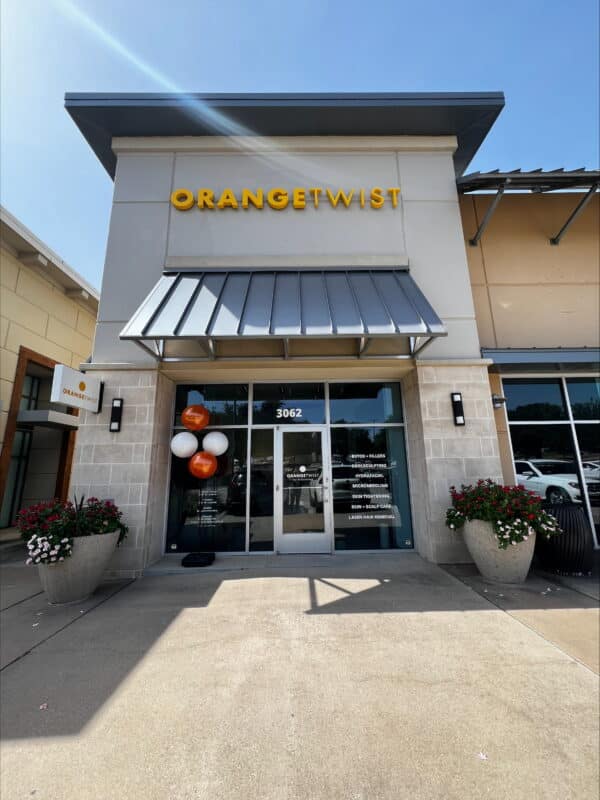
Fort Worth – Alliance Town Center
3062 Texas Sage Trail, Fort Worth, TX 76177, USA
Monday
Tuesday
Wednesday
Thursday
Friday
Saturday
Sunday
9:00 AM – 6:00 PM
9:00 AM – 6:00 PM
9:00 AM – 6:00 PM
9:00 AM – 6:00 PM
9:00 AM – 6:00 PM
9:00 AM – 5:00 PM
Closed

Sabrina Huerta
Center Manager


Got Goals?
We’re Listening.
Book your no-pressure, no-cost You Review and let’s talk about your vision.