Skin Care Education
Why Autumn Is the Right Time to Start Laser Hair Removal
Laser hair removal timing advice often gets treated as a generic marketing angle, book now for summer. The autumn timing argument is different: it holds up specifically because of how the treatment interacts with sun exposure, not because of a seasonal sale. Understanding that connection is what makes the timing worth considering rather than just a calendar suggestion.
Table of Contents
Key takeaways
- Laser hair removal requires a two to four week waiting period after sun exposure or a fading tan before each session, a safety and effectiveness consideration, not a scheduling inconvenience invented for this piece.
- Starting in autumn means this waiting period rarely conflicts with your sun exposure, since outdoor time naturally decreases through fall and winter.
- A typical series involves six to eight sessions spaced four to six weeks apart, meaning an autumn start puts you on track to finish well before the following summer.
- Starting in late spring or summer instead means ongoing sun exposure can repeatedly trigger the waiting period, extending your timeline beyond what the base schedule suggests.
- Areas that are not usually exposed to the sun may be treated year-round, since the waiting period is tied to sun exposure.
- This reasoning applies regardless of hair or skin type; the timing advantage is about sun exposure interaction with the treatment, not a suitability factor.
Why the sun-exposure waiting period is the whole reason this matters
Before each laser hair removal session, a waiting period of two to four weeks after sun exposure or a fading tan is required. This is not an arbitrary scheduling rule; recently tanned or sun-exposed skin carries risk during treatment, which is why this waiting period exists as a safety and effectiveness consideration. This single fact is what makes the entire autumn-timing argument hold up, rather than being a generic seasonal suggestion.
What happens if you start in late spring or summer instead
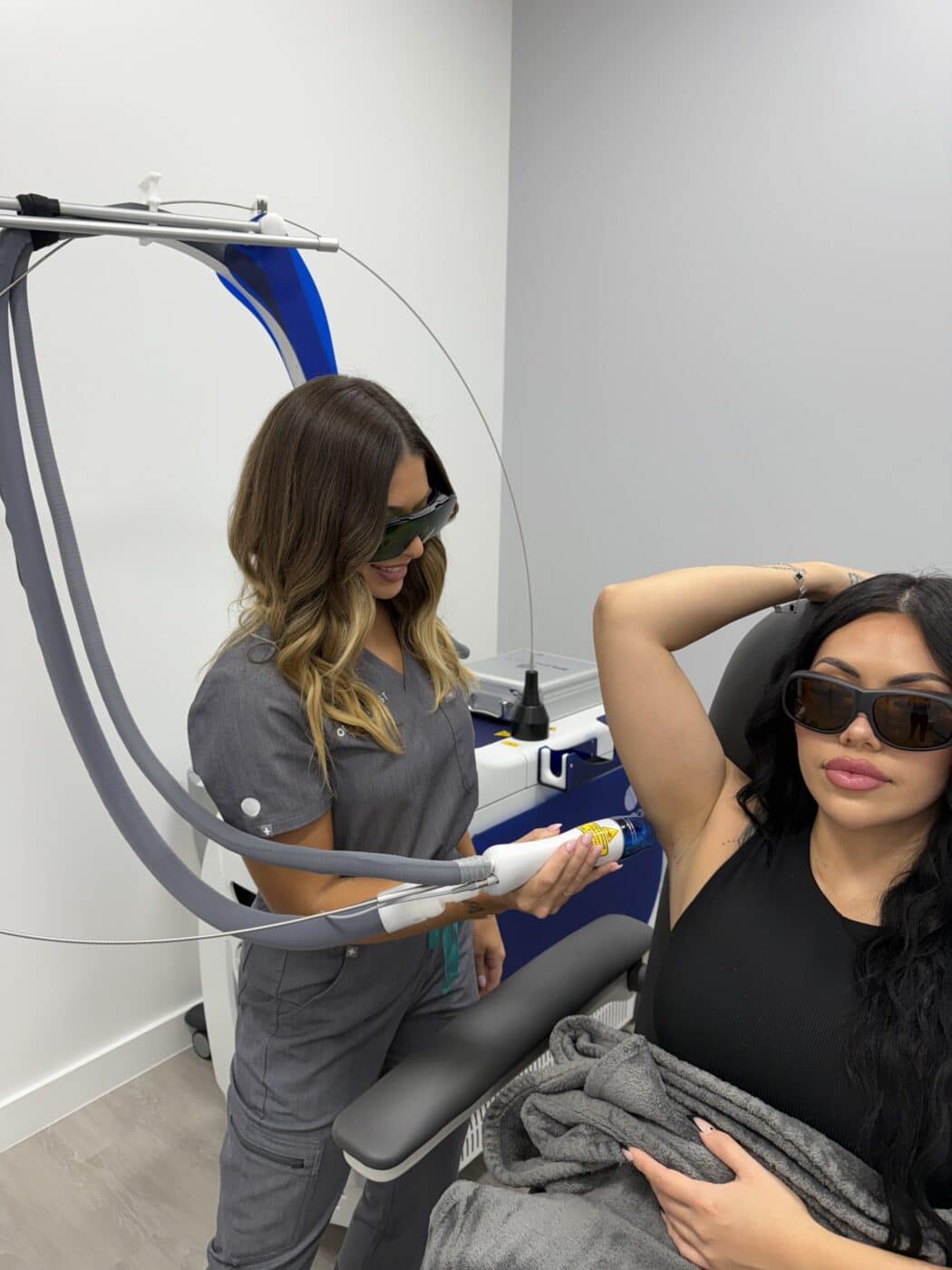
Starting a series when ongoing sun exposure is likely means the two to four week waiting period can be triggered repeatedly throughout your series, not just once at the start. A weekend of sun exposure between scheduled sessions can push your next appointment back, which compounds across a six to eight session series and can meaningfully extend your timeline beyond the base four to six week spacing.
Why autumn avoids this problem structurally
Starting in autumn means the sun exposure that would trigger the waiting period is naturally decreasing through the months your series is running. This does not require you to actively avoid the sun in some unusual way; it simply means your series lines up with a season where the waiting period is less likely to become a repeated scheduling obstacle.
Areas that are not exposed to the sun can be treated year-round
The waiting period exists because of sun exposure, so it matters most for areas that actually see the sun. Areas that are not usually exposed to the sun, because clothing typically covers them, may be treated year-round, since there is less recent exposure to wait out between sessions. An autumn start remains the simplest choice for any area that does see the sun, and it lets you plan all of your treatment areas on one schedule if you prefer. Your provider confirms how this applies to each area you want treated, based on how much sun it actually gets, at your You Review.
What an autumn-start timeline looks like
| Approximate timing | What is happening |
|---|---|
| Early autumn | Series begins, with sun exposure already naturally decreasing |
| Through autumn and winter | Sessions proceed at the standard four to six week spacing, with sun exposure rarely triggering the waiting period |
| Early spring | Series wraps up as sessions conclude, roughly six to eight sessions after starting |
| Before summer | Series is complete well ahead of peak sun-exposure season |
A note on hair type, briefly
Laser hair removal works by targeting melanin in the hair, which is why blonde, red, gray, or white hair responds poorly regardless of when treatment starts. This is a separate consideration from timing and is assessed honestly by your provider at your You Review.
Why this matters especially given Boulder’s outdoor culture
An active, outdoor-oriented lifestyle, common in Boulder specifically, tends to mean more frequent sun exposure through the warmer months than a more indoor routine might involve. This makes the timing consideration more relevant here than it might be somewhere with a less consistently outdoor-focused calendar, since the odds of sun exposure interrupting a spring or summer series are correspondingly higher.
What this means for suitability
This timing reasoning applies broadly to anyone who is otherwise a good candidate for laser hair removal. Your specific candidacy, including hair and skin type, is assessed by your provider at your You Review rather than determined by season.
Why choose OrangeTwist Boulder?
Our Boulder team builds your laser hair removal schedule around the interaction between sun exposure and treatment timing, not just a generic calendar. Every plan starts with a complimentary You Review.
Frequently Asked Questions
A waiting period of two to four weeks after sun exposure or a fading tan is required before each session, since treating recently tanned or sun-exposed skin carries risk. This is a safety and effectiveness consideration.
Starting in autumn means the sun exposure that would otherwise trigger the required waiting period is naturally decreasing through the months your series runs, reducing the chance of repeated scheduling delays.
Ongoing sun exposure can trigger the required waiting period multiple times throughout your series, which compounds across a multi-session series and can extend your timeline.
A typical series involves six to eight sessions spaced four to six weeks apart. Starting in autumn generally puts you on track to finish before the following summer.
The sun-exposure timing reasoning applies regardless of hair or skin type. Separately, laser hair removal responds poorly to blonde, red, gray, or white hair due to low melanin content, which your provider assesses at your You Review.
Areas that are not usually exposed to the sun may be treated year-round, since there is less recent sun exposure to wait out between sessions. Your provider confirms how this applies to each area you want treated at your You Review.
Yes, your provider builds a schedule around your specific goals and timing at your complimentary You Review.
The bottom line
The autumn-timing advantage for laser hair removal is not a seasonal sales pitch; it follows directly from the sun-exposure waiting period required before each session. Starting when sun exposure is naturally decreasing means your series is less likely to hit repeated scheduling delays, and puts you on track to finish before next summer. A complimentary You Review at our Boulder center is where your specific schedule gets built. Areas that are not exposed to the sun may be treated year-round.
Ready when you are
Book a complimentary, no-pressure You Review and your provider will build a realistic schedule around your goals.
Visit us in Boulder

Monday
Tuesday
Wednesday
Thursday
Friday
Saturday
Sunday
Closed
9:00 AM – 6:00 PM
9:00 AM – 6:00 PM
9:00 AM – 6:00 PM
9:00 AM – 6:00 PM
9:00 AM – 5:00 PM
Closed


Got Goals?
We’re Listening.
Book your no-pressure, no-cost You Review and let’s talk about your vision.