Skin Care Education
Laser Hair Removal for Beginners: What to Know Before Your First Session
If you have never had laser hair removal before, the amount of conflicting information online can make a fairly simple treatment feel complicated. This guide is the orientation: what actually happens at your first session, how many sessions you will realistically need, what it feels like, roughly what it costs, and the handful of things worth doing beforehand. For deeper detail on any one piece of this, cost, the full results timeline, or aftercare specifically, we link out to our dedicated guides rather than repeat them here.
Table of Contents
Key takeaways
- Laser hair removal targets the pigment in the hair follicle, which is why it works best on hair that contrasts with the surrounding skin, and why a licensed provider will assess your hair and skin tone before your first session.
- Most areas need six to eight sessions spaced four to six weeks apart, since the treatment only affects hair in an active growth phase at the time of your visit, and different follicles cycle on their own schedule.
- Most clients describe the sensation as a quick, warm snap, more tolerable than expected, rather than significant pain.
- Simple prep matters: shave the area beforehand rather than waxing or plucking, and avoid sun exposure and self-tanner in the days before your session.
- Results build gradually across the full series, not after a single session, which is the most common first-timer misconception.
How laser hair removal actually works
The laser targets melanin, the pigment in hair, converting light into heat that damages the follicle enough to disable future growth. This is why the treatment historically worked best on dark hair against lighter skin, though modern devices have expanded what can be treated safely and effectively across a wider range of skin tones. Your provider assesses your specific hair and skin at your consultation rather than assuming a generic profile.
Hair grows in cycles, and at any given time only a portion of the hair in a treated area is in the active growth phase the laser can affect. That is the entire reason this requires a series of sessions rather than one visit: each session catches a different batch of hair as it cycles into the active phase.

What your first session actually looks like
- A brief consultation where your provider reviews your medical history, confirms the area, and checks your skin.
- The treatment area is cleaned, and a cooling gel or the device’s built-in cooling is used to protect the skin surface.
- The provider passes the device over the area in sections, delivering pulses of light. Most people describe each pulse as a quick, warm snap, like a rubber band, rather than ongoing pain.
- Session length depends on the area: small areas like the upper lip take just a few minutes, while larger areas like full legs take longer.
- Immediately afterward, the area may look slightly red or feel warm, similar to mild sunburn, which typically settles within a few hours.
There is no meaningful downtime. Most clients go straight back to their day.
What to do before your first session
| Do this | Why |
|---|---|
| Shave the area 12 to 24 hours before | The laser targets the follicle beneath the skin, not the visible hair; shaving avoids burning hair on the surface without affecting the treatment |
| Avoid waxing, plucking or threading for several weeks before | These remove the hair from the root, which is exactly what the laser needs to be present to target |
| Avoid sun exposure and tanning beds for at least two weeks before | Tanned or sunburned skin carries a higher risk of irritation and pigment changes during treatment |
| Skip self-tanner before your session | Self-tanner can interfere with the device’s ability to distinguish your natural skin tone from the hair |
| Come with clean skin, free of lotion, deodorant or makeup on the treatment area | Products on the skin can interfere with the laser and increase the risk of irritation |
| Mention any medications or recent sun exposure at your consultation | Certain medications increase photosensitivity, which your provider needs to know about before treating you |
How many sessions will you actually need?
Most areas need six to eight sessions to see the fuller result, spaced four to six weeks apart to align with the hair growth cycle. Coarser, denser hair areas sometimes need more sessions than finer areas. This is not a sign anything went wrong; it reflects how hair growth cycles work, not the quality of any individual treatment.
After the initial series, many clients maintain results with an occasional touch-up session as needed, since some regrowth over time is normal even after a full course. For the complete stage-by-stage results timeline, including what to expect between each session, see our dedicated Laser Hair Removal Timeline guide.
What it costs, briefly
Pricing depends on the treatment area, since larger areas need more time and energy per session, and on how many sessions your specific plan calls for. Package pricing across a full series is common and generally more cost-effective than paying per session. Your provider gives you a clear, itemized price at your consultation. For a full breakdown of what actually drives laser hair removal pricing, see our dedicated Laser Hair Removal Cost guide.
Who is a good candidate?
Most people are good candidates, and modern devices have expanded who can be treated effectively compared to older laser technology. It may be less appropriate, or need a different conversation first, in these situations:
- Pregnancy.
- A recent tan or sunburn in the treatment area.
- Certain photosensitizing medications, which your provider will screen for.
- A history of keloid scarring or certain skin conditions, which your provider will assess individually.
- Very light or grey hair, which can respond less predictably to laser treatment given how the technology targets pigment.
None of these automatically rule treatment out. They are simply what your provider factors in when recommending a plan.
Risks and realistic expectations
Risks and realistic expectations
Laser hair removal has a strong safety record when performed by a trained provider. Here’s what a responsible first-timer guide should cover, not just the marketing version.
Common and expected
Mild redness, slight swelling, or a warm, sunburn-like sensation in the treated area. This resolves within a few hours.
Rare
Pigment changes or blistering in the treated area. Proper device calibration and a trained, licensed provider are what keep this risk low, more than the specific brand of laser.
Limitations
Laser hair removal reduces hair over a series of sessions. It’s long-term reduction, not an absolute guarantee against any future regrowth. Light or red hair on light skin is the one combination that doesn’t respond as well, since the treatment works by targeting pigment in the hair.
Why choose OrangeTwist Brea?
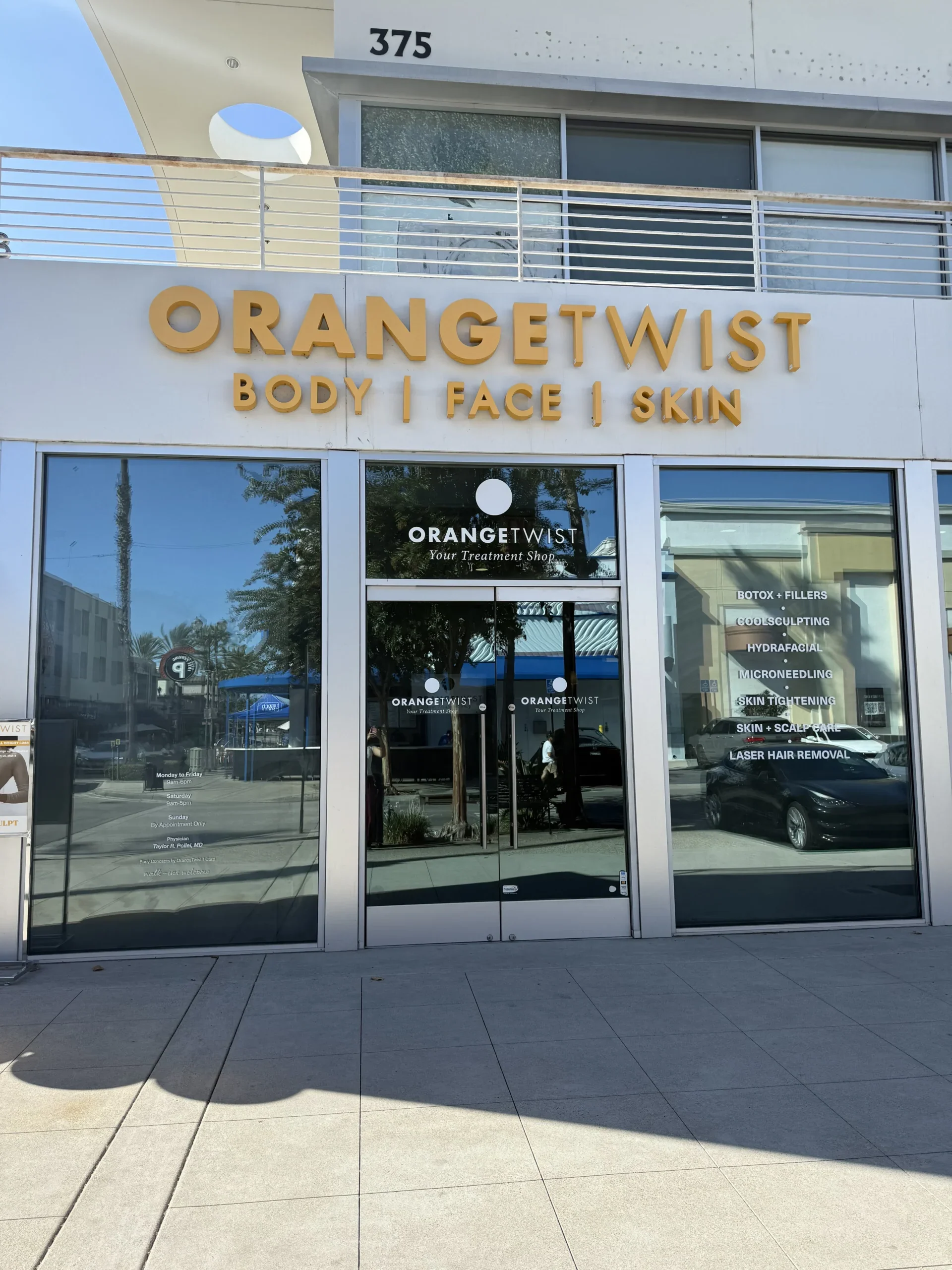
Laser hair removal at our Brea center is delivered under the medical oversight of Dr. Taylor R. Pollei, MD, with providers trained on the specific devices we use. Your first visit starts with a genuine assessment of your hair, skin, and goals, not an assumption that everyone gets the same plan.
Clients visit us from across Brea, La Habra, Fullerton, Yorba Linda, and Placentia, and if laser hair removal is not the right fit for your specific hair or skin, your provider will tell you that directly rather than book you into a series that will not deliver.
Frequently Asked Questions
Most clients describe each pulse as a quick, warm snap, similar to a rubber band against the skin, rather than significant pain. Sensitivity varies by area, with areas like the upper lip and bikini line generally more sensitive than legs or arms. Most people tolerate it well without any numbing needed.
Most areas need six to eight sessions, spaced four to six weeks apart, since the laser only affects hair in its active growth phase and different follicles cycle at different times. Coarser or denser hair sometimes needs more sessions. This is normal, not a sign of a problem.
Shave the treatment area 12 to 24 hours beforehand, avoid waxing or plucking for several weeks prior, and avoid sun exposure, tanning, and self-tanner for at least two weeks before. Arrive with clean skin, free of lotion or makeup on the area.
Modern devices have expanded who can be treated effectively, though the treatment still works by targeting pigment in the hair, so very light, grey, or white hair responds less predictably. Your provider assesses your specific hair and skin tone at your consultation rather than assuming a generic profile.
It is best described as long-term hair reduction rather than an absolute permanent guarantee. Treated follicles are significantly reduced, and many clients maintain results with an occasional touch-up session over time, since some regrowth is normal even after a full series.
Yes. Laser hair removal at our Brea center is delivered under the medical oversight of Dr. Taylor R. Pollei, MD. Your provider will assess your hair, skin, and goals together at your consultation before recommending a plan.
The bottom line
Laser hair removal is a well-established, well-understood treatment, and most of the uncertainty first-timers feel comes from not knowing what to expect rather than the treatment itself being complicated. A short series of sessions, sensible prep, and realistic expectations about timeline are really the whole story. A consultation at our Brea center is where your specific hair, skin, and goals get mapped into an honest plan.
Ready when you are
Book a complimentary, no pressure You Review and we will build the right plan for you, with no obligation to book treatment.
Visit Us in Brea

Monday
Tuesday
Wednesday
Thursday
Friday
Saturday
Sunday
9:00 AM – 6:00 PM
9:00 AM – 6:00 PM
9:00 AM – 6:00 PM
9:00 AM – 6:00 PM
9:00 AM – 6:00 PM
9:00 AM – 5:00 PM
Closed

Dalia Shoham
Center Manager


Got Goals?
We’re Listening.
Book your no-pressure, no-cost You Review and let’s talk about your vision.