Skin Care Education
Filler Touch-Ups: Building a Realistic Maintenance Schedule
Filler is not permanent, and that is by design. Building a maintenance schedule around that fact, rather than waiting until results have fully faded, is what keeps your results looking consistent over time.
Table of Contents
Key takeaways
- Filler results typically last six to eighteen months, varying by product and treatment area.
- Areas with more natural movement, like the lips, need more frequent touch-ups than areas like the cheeks or jawline.
- The best time to schedule maintenance is before your results have fully faded, not after, since this allows more precise correction.
- Maintenance sessions are typically smaller in volume than your original treatment, since you are adding to what remains rather than starting over.
- Your provider maps a specific maintenance schedule for your face and products at your You Review.
Why timing your touch-up matters more than it seems
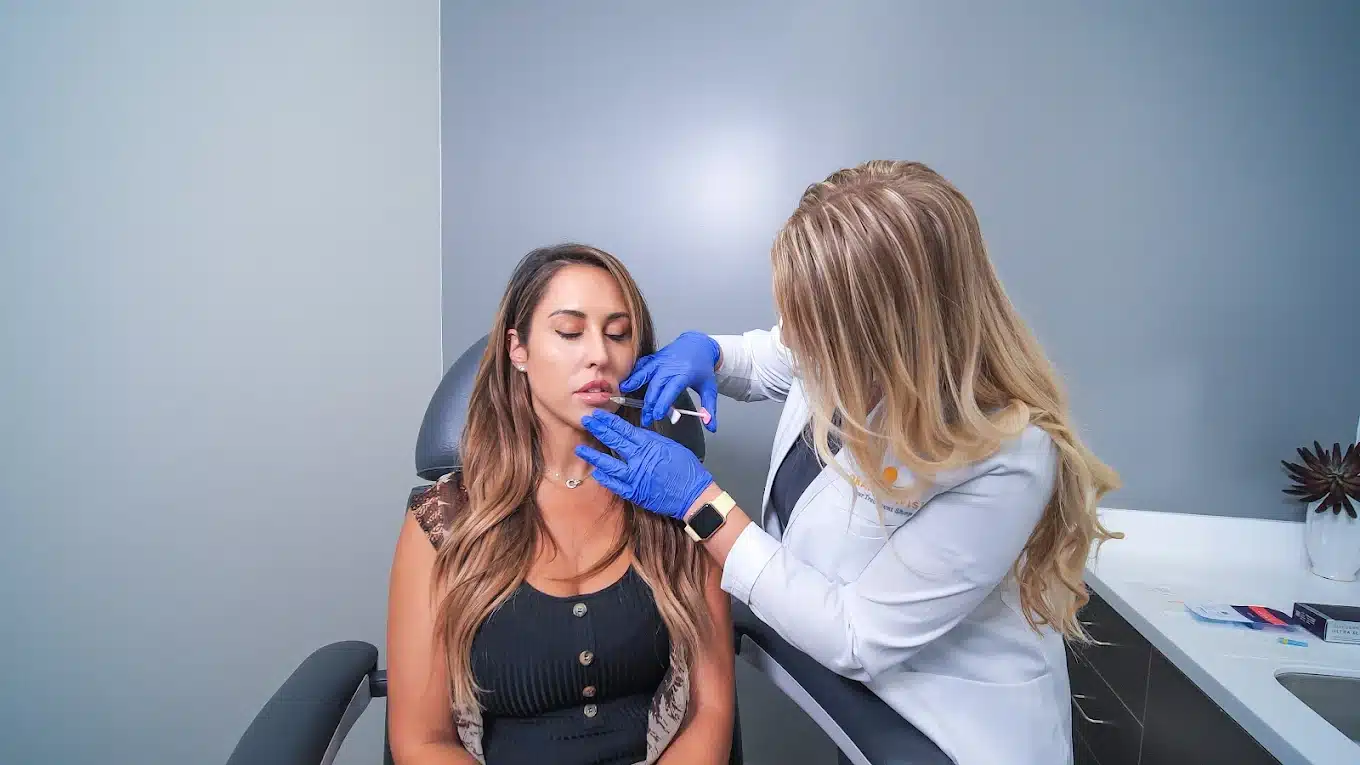
Coming in for a touch-up while some of your original filler still remains lets your provider see exactly what is there and add precisely to restore your result, rather than assessing a face that has returned entirely to its pre-filler baseline. This distinction affects both the outcome and the amount of product typically needed, since building on a partial result requires less correction than starting completely over.
Why waiting until results are fully gone works against you
Waiting until filler has completely faded before scheduling your next session means your provider is essentially starting from the same baseline as your very first appointment, rather than building on a partial result. This often means a larger volume is needed to reach the same result you were maintaining, and it also means you spend more time visibly further from your desired look while waiting to notice the fade and then book an appointment.
Why different areas need different schedules
| Area | Typical maintenance pattern |
|---|---|
| Lips | Tend to need more frequent touch-ups, due to the constant movement of the mouth |
| Cheeks and jawline | Tend to last longer between touch-ups, given less constant movement in these areas |
| Tear troughs and other delicate areas | Your provider sets a specific schedule based on the product used and how your individual anatomy responds |
What a maintenance appointment looks like
A maintenance session is typically smaller in volume than your original treatment, since your provider is adding to what remains rather than building a result from nothing. This also tends to make maintenance sessions more efficient and more precisely targeted, since your provider already has a clear picture of how your specific face holds the product over time from your previous visits.
Why your own fade pattern is more useful than an average
The six to eighteen month range reflects variation across products, areas, and individuals, which means your own specific experience is a better planning guide than the range alone. If your results held strongly for a year the first time, that is a more useful number for planning your next appointment than assuming the midpoint of the range applies to you. Your provider tracks this pattern with you across visits, refining your specific schedule as more data becomes available.
How to build your own maintenance schedule
- Note roughly how long your results held well after your first treatment, as a starting reference point.
- Plan your next appointment before you expect a full fade, based on that reference point, rather than waiting for a visible change to prompt you.
- Adjust as you go: your provider refines your specific schedule based on how each session holds over time.
- Bring up any upcoming events you are planning around, so your schedule accounts for them rather than working against them.
What this means for suitability
Your specific maintenance schedule, including which products and how often, is something your provider builds with you over time at your You Review appointments, based on how your individual face and chosen products perform.
Why choose OrangeTwist Reno?
Our Reno team tracks how your specific results hold over time and helps you build a maintenance schedule around that, rather than leaving you to guess when to come back. Every visit starts with a complimentary You Review.

Frequently Asked Questions
The best time is before your results have fully faded, not after. Coming in while some product remains allows your provider to add precisely rather than starting over.
Once filler has fully faded, your provider is essentially starting from your original baseline again, rather than building on a partial result, which typically means more product is needed to reach the same look.
No. Areas with more movement, like the lips, need more frequent touch-ups than areas like the cheeks or jawline, which tend to last longer.
Usually smaller. Maintenance sessions typically add to what remains rather than building a result from nothing.
Your provider builds your specific schedule based on how your individual face and chosen products perform over time, refining it at each visit.
Yes, your provider tracks your results and helps build a realistic ongoing schedule at your You Review.
The bottom line
Filler is designed to fade, and the most efficient, natural-looking way to manage that is scheduling your next visit before results are fully gone, not after. This keeps your results consistent, tends to require less product per visit, and is easier to plan around once you know your own timeline. A complimentary You Review at our Reno center is where that specific schedule gets built.
Ready when you are
Book a complimentary, no-pressure You Review and your provider will help you plan ahead.
Visit us in Reno

Monday
Tuesday
Wednesday
Thursday
Friday
Saturday
Sunday
8:00 AM – 6:00 PM
8:00 AM – 6:00 PM
8:00 AM – 6:00 PM
8:00 AM – 6:00 PM
8:00 AM – 6:00 PM
8:00 AM – 5:00 PM
Closed


Got Goals?
We’re Listening.
Book your no-pressure, no-cost You Review and let’s talk about your vision.