Skin Care Education
BBL Photofacial for Sun Damage in South Bay: What to Expect
If you have spent years in Southern California sun, your skin keeps the receipts: sun spots, uneven tone, redness, and a dullness that skincare alone cannot lift. BBL Photofacial is one of the most effective ways to address that accumulated damage. This guide covers how it works, what it treats, why timing matters, and what to expect at our South Bay center.
Table of Contents
Key takeaways
- BBL Photofacial uses broadband light to target pigmentation, redness, and dullness from accumulated sun exposure, with little to no downtime.
- Most clients do a series of three to six sessions, and fall and winter are the best seasons to treat, when sun exposure is easier to limit.
- At OrangeTwist South Bay, BBL is delivered on Sciton’s Forever Young BBL platform, one of the most established photofacial technologies in aesthetic medicine.
- BBL is not a one-visit fix and is approached cautiously for melasma, which your provider will assess at your complimentary You Review.

What is a BBL Photofacial?
BBL stands for BroadBand Light, Sciton’s refined version of the intense pulsed light technology that has been used in aesthetic medicine for decades. Pulses of light target the pigment and small blood vessels behind sun spots, redness, and uneven tone, and your skin gradually clears the treated pigment over the following weeks. At OrangeTwist South Bay it is delivered as Forever Young BBL, the protocol clinically studied for its effect on how treated skin ages over time, and it is one of the treatments LA Westside clients ask about most once summer tans fade and the underlying sun damage shows.
How BBL works
The handpiece delivers precise pulses of light into the skin, where the energy is absorbed by two main targets: melanin, the pigment behind sun spots and freckling, and hemoglobin in the small vessels behind redness. The treated pigment darkens briefly, rises to the surface, and flakes away over roughly one to two weeks, while redness gradually fades as the vessels close down.
Because BBL offers refined wavelength control, your provider selects filters suited to your skin and your specific concern, which is part of why results are more consistent than with generic pulsed-light devices. It is a light-based treatment, not a laser in the strict sense, and the surface of the skin is not broken.
The types of concerns we can treat with BBL
- Sun spots, age spots, and freckling from accumulated UV exposure
- Redness and small visible vessels across the cheeks and nose
- Uneven, blotchy tone that makeup no longer evens out
- Overall dullness in skin that has lost its clarity
BBL is not the right tool for every concern. It works gradually across a series rather than in a single visit, it is not a texture or wrinkle treatment on its own, and it is approached cautiously for melasma, since heat-based treatments can sometimes make melasma worse. If melasma is your main concern, your provider will discuss whether BBL is appropriate for you or whether a different plan makes more sense.
BBL compared with Hydrafacial and chemical peels
These three get grouped together because all refresh sun-stressed skin, but they work at different levels. A Hydrafacial cleans and hydrates the surface, a chemical peel resurfaces, and BBL targets the pigment and vessels underneath.
| BBL Photofacial | Hydrafacial | Chemical peel | |
|---|---|---|---|
| What it does | Light targets pigment and redness below the surface | Deep-cleans, exfoliates, and hydrates the surface | Resurfaces the outer layers of skin |
| Best for | Sun spots, redness, uneven tone | Congestion, dullness, hydration | Texture, tone, fine lines |
| Sessions | Often 3 to 6 | Monthly maintenance | Single or spaced series |
| Downtime | Minimal, brief darkening of spots | None | Varies by peel depth |
| Seasonality | Best in fall and winter | Year round | Depth dependent |
Results and timeline
Expect treated sun spots to darken over the first few days, a sign the light found its target, then flake away over one to two weeks to reveal clearer, more even skin. Redness fades more gradually across the series. Most clients see meaningful improvement after two or three sessions, with the fuller result across three to six visits spaced about a month apart.
Timing matters more with BBL than with most treatments. Fall and winter are the best seasons to treat, because treated skin needs strict sun protection and a tan can interfere with how the light targets pigment. Daily SPF is non-negotiable during and after a series, and it is also the single best way to protect your results.
How our South Bay team approaches BBL
Our South Bay providers plan BBL around honesty on two fronts: the number of sessions and the calendar. Accumulated sun damage did not appear in one summer, and it does not clear in one visit, so the plan is mapped as a realistic series at your You Review. The team also schedules around your sun exposure, steering treatment toward the cooler months and building SPF habits into the plan, because a photofacial without sun protection is a treadmill.
BBL Photofacial: Frequently Asked Questions
Most clients describe it as a series of warm snaps against the skin, like a small rubber band flick, and it is over quickly. Your provider adjusts settings to your comfort, and the skin may feel warm, like mild sun exposure, for a short while afterward.
Most clients do three to six sessions, spaced about a month apart, depending on how much accumulated damage there is. Your provider maps out a realistic number at your complimentary You Review, and many clients then maintain with a session or two per year.
BBL is priced per session, and the total depends on how many sessions your plan needs. Your provider gives you a clear, itemized plan and price at your complimentary You Review before you commit to anything.
Very little. Treated spots typically darken for a few days and then flake away over one to two weeks, and skin may look slightly flushed on the day. Most clients go straight back to their routine with SPF on.
Fall and winter. Treated skin needs strict sun protection, and active tanning interferes with how the light targets pigment, so the cooler months are the practical window for a series in Southern California.
Cautiously, and not always. Melasma is one of the most stubborn pigmentation conditions, and heat-based treatments can sometimes make it worse. Your provider will assess your skin at the You Review and be honest about whether BBL is appropriate or whether a different plan suits you better.
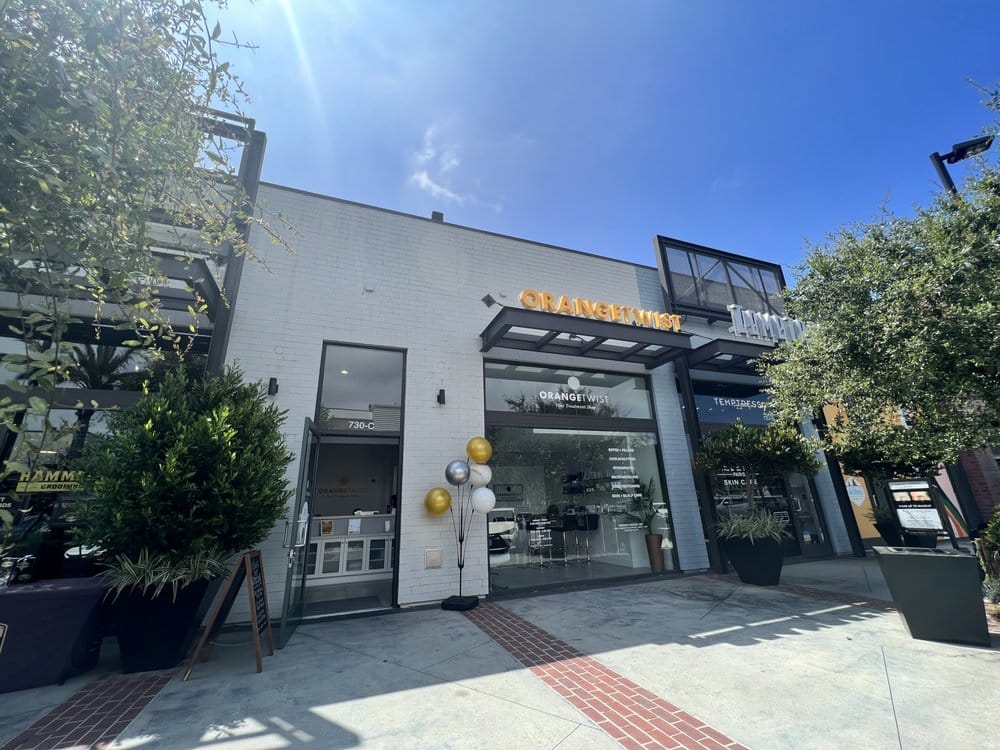
OrangeTwist South Bay is at 730 South Allied Way, Suite C, El Segundo, CA 90245, in The Works shopping center, off Allied Way and Sepulveda Boulevard. We are next to Temptress and One Medical, and directly across from Barry’s.
The bottom line
BBL Photofacial is the most direct way to address the sun spots, redness, and uneven tone that years of California sun leave behind, and at our South Bay center it is planned as an honest series with realistic timing. The best next step is a complimentary You Review, where your provider assesses your skin and maps a plan built around your calendar and your goals.
Ready when you are
Book a complimentary, no-pressure You Review and we will talk through what BBL can do for your skin, with no obligation to book anything else.
Visit us in South Bay
California
Los Angeles – South Bay
730 S Allied Way Ste C, El Segundo, CA 90245, USA
Monday
Tuesday
Wednesday
Thursday
Friday
Saturday
Sunday
9:00 AM – 6:00 PM
9:00 AM – 6:00 PM
9:00 AM – 6:00 PM
9:00 AM – 6:00 PM
9:00 AM – 6:00 PM
9:00 AM – 5:00 PM
10:00 AM – 5:00 PM

Kai Aiyub
Center Manager

Got Goals?
We’re Listening.
Book your no-pressure, no-cost You Review and let’s talk about your vision.