Skin Care Education
Hooded Eyes
Excess skin on the upper eyelid that drapes down over the natural eyelid crease, sometimes reaching the lash line. Can be a lifelong facial feature or a change that develops gradually with age.
Table of Contents
What Are Hooded Eyes?
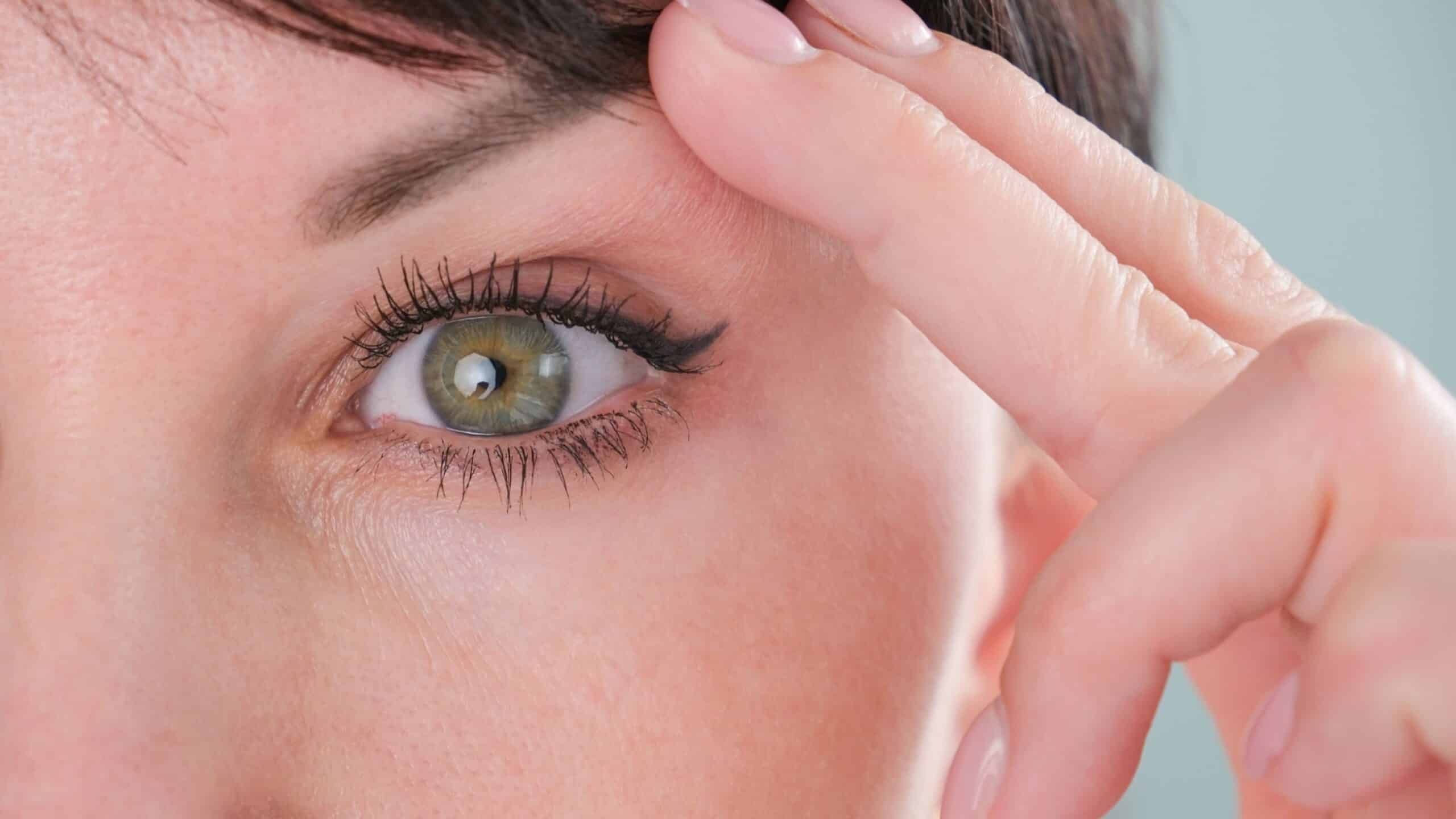
Hooded eyes describe a pattern in the upper eyelid where a fold of skin hangs down over the eyelid crease, partially or fully obscuring it. For some people this is a lifelong feature of their eye shape, present since childhood and tied to bone structure and skin position. For others, it develops gradually as the skin and underlying tissue of the upper eyelid loses firmness with age, causing a crease that was once visible to become covered.
The practical effects people notice tend to be cosmetic in mild cases: eyeshadow becoming harder to see once applied, the eye appearing smaller or more tired-looking, or the crease disappearing when the eyes are open. In more pronounced cases, the excess skin can begin to affect the visual field, particularly toward the outer corners.
Hooded eyes are one of the most commonly searched eye-area concerns, and are frequently confused with, or combined with, drooping eyelids (ptosis), which is a related but distinct condition.
Types of Hooded Eyes
Hooded eyes can present in different forms:
- Genetic or lifelong hooding: present from a young age, tied to bone structure and natural skin distribution rather than any aging process.
- Age-related hooding: develops gradually as upper eyelid skin loses collagen and elastin over time.
- Brow-position hooding: caused primarily by a lowered brow pushing additional skin down into the upper eyelid area, rather than eyelid skin itself.
Causes and Contributing Factors
| Factor | Description |
|---|---|
| Genetics and bone structure | Many people have hooded eyes as a lifelong feature, tied to brow bone position and natural skin distribution. |
| Age-related skin laxity | As skin loses collagen and elastin over time, the upper eyelid skin can lose firmness and descend over the crease. |
| Brow position | A brow that has dropped over time can push additional skin down into the upper eyelid area, compounding the appearance of hooding. |
| Sun exposure | Cumulative UV damage accelerates the breakdown of collagen and elastin in the thin eyelid skin. |
Frequently Asked Questions: Acne
No. Many people have hooded eyes as a natural, lifelong feature of their eye shape, present well before any signs of aging. Age-related changes can add to existing hooding or create it where it was not previously present.
In mild to moderate cases, no. In more pronounced cases, particularly where excess skin extends toward the outer corner of the eye, it can begin to affect the upper or outer visual field.
It depends on the cause. Where hooding is being driven primarily by a lowered brow position, addressing brow position can meaningfully improve the appearance of the upper lid. Where hooding is primarily due to excess skin at the eyelid itself, brow position addresses only part of the picture.
Not exactly. Hooded eyes involve excess skin covering the eyelid crease. Droopy eyelids, or ptosis, involve the eyelid margin itself sitting lower than normal, sometimes affecting the muscle that lifts the eyelid. The two can occur separately or together.
Treatments to Live For



Got Goals?
We’re Listening.
Book your no-pressure, no-cost You Review and let’s talk about your vision.